

What is Pilates?
Pilates is a unique mind-body exercise method developed in the early 20th century by Joseph Pilates, who originally called his system "Contrology." Born frail, he dedicated his life to improving physical strength and well-being. During World War I, he developed his method while helping rehabilitate internees, focusing on building strength, mobility, and recovery. He later refined his techniques, working with dancers and athletes, leading to the sophisticated system we know today.
Pilates focuses on developing core strength, flexibility, balance, coordination, and precise movements, all integrated with controlled breathing. It can be practiced on a mat (Mat Pilates) or using specialized equipment (e.g., Reformer, Cadillac, Chair) that utilize springs for resistance and assistance.
How does it work?
Pilates operates on several key principles: Centering, Concentration, Control, Precision, Breath, and Flow. It works by targeting and strengthening the deep stabilizing muscles of the core (including the transverse abdominis and multifidus), which are crucial for spinal support and overall body mechanics. Research suggests that consistent Pilates practice helps to:
• Improve core strength and stability, acting as a foundation for all movement.
• Enhance flexibility and joint mobility.
• Develop better posture and body awareness.
• Improve balance and coordination.
• Create more balanced muscle development, reducing imbalances that can lead to pain or injury.
By engaging both mind and body, Pilates helps you move more efficiently and gracefully in all aspects of life.
What to expect
During a Pilates session, you will likely feel your muscles working deeply and intensely, especially in your core. You might experience a "shaking" sensation in muscles as they are challenged in new ways. The focus on precision and control means movements are deliberate, not fast or jarring. Many participants report leaving a session feeling taller, more aligned, energized yet calm, with a heightened sense of body awareness. While challenging, Pilates should not cause sharp or debilitating pain. Any discomfort should be communicated to your instructor.
How long will the treatment take?
A typical Pilates session, whether a group mat class or a private equipment session, usually lasts between 45 to 60 minutes. The duration allows for a comprehensive warm-up, a series of targeted exercises, and a cool-down, ensuring a balanced and effective workout.
General frequency
For optimal results and to truly experience the benefits of Pilates, it is generally recommended to practice 2 to 3 times per week. Consistent practice allows your body to learn the movements and principles deeply, leading to greater strength and control. However, even practicing once a week can provide benefits for maintenance or as part of a broader fitness routine. Your instructor can help you determine the ideal frequency based on your individual goals and current fitness level.
Is it safe or effective?
Yes, Pilates is generally considered safe and highly effective for a wide range of individuals across all ages and fitness levels. Its adaptability allows instructors to modify exercises to suit beginners, those with injuries, or advanced athletes. Numerous studies and systematic reviews have demonstrated the effectiveness of Pilates for various benefits, including significant reductions in chronic low back pain, improvements in posture, increased flexibility, enhanced balance, and improved core strength. When taught by a qualified and certified instructor, the method focuses on proper form and alignment, minimizing the risk of injury and maximizing benefits.
Are there any risks or side effects?
When performed with proper instruction, Pilates has a low risk of serious side effects. The most common side effect is muscle soreness (Delayed Onset Muscle Soreness, or DOMS) in the days following a session, especially when you are new to the practice or performing new exercises. Risks mainly arise from improper form or attempting exercises beyond one's current ability, which could lead to strains or exacerbation of existing injuries (e.g., neck strain from improper head positioning, low back strain). Pilates instructors are trained to provide modifications for various conditions. However, individuals with acute injuries, severe osteoporosis, certain spinal conditions, or during later stages of pregnancy should consult their healthcare provider and seek an instructor qualified to work with specific populations to ensure exercises are appropriately modified.
How do I know I need it?
You might benefit from Pilates if you are looking to:
• Strengthen your core and improve abdominal strength.
• Alleviate chronic low back or neck pain.
• Improve your posture and body alignment.
• Increase your flexibility and range of motion.
• Enhance balance and coordination.
• Support injury prevention or rehabilitation (with medical clearance).
• Cross-train for athletic performance (e.g., running, dancing).
• Reduce stress and improve body awareness.
• Develop longer, leaner muscles and a more toned physique.
If you are seeking a holistic exercise method that focuses on controlled movement, strength, and mind-body connection to improve overall physical well-being, Pilates could be an excellent choice for you.
Sports Chiroporactic
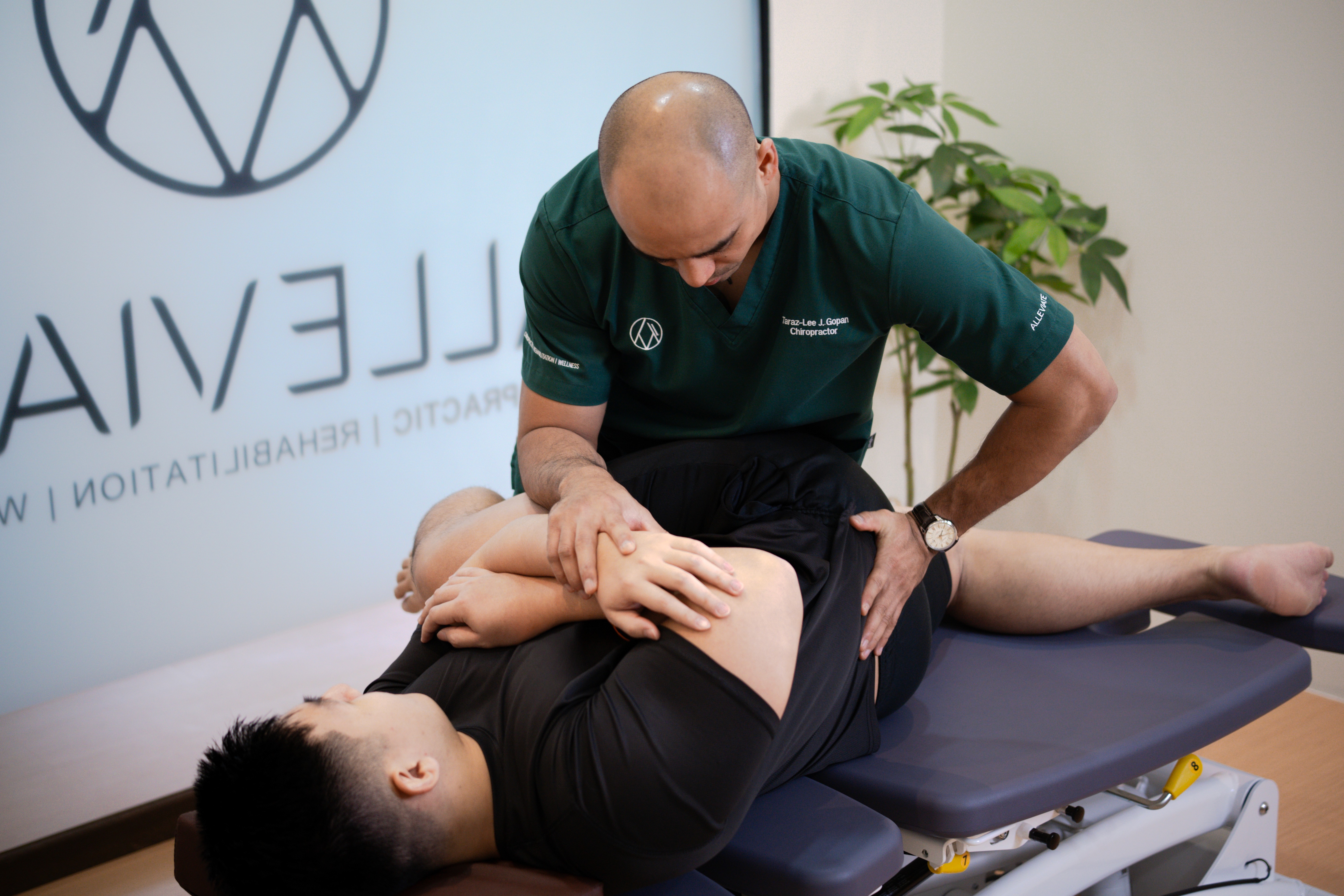
What is Sports Chiropractic?
Sports Chiropractic is an elite clinical discipline focused on the optimization of the function. While traditional chiropractic care centers on spinal alignment, Sports Chiropractic adopts a comprehensive, system-wide approach to the body’s mechanical framework. It is a combination of precise spinal manipulation and advanced soft tissue therapies, designed to enhance the functional relationship between the skeletal system and the muscles that drive movement.
Sports Chiropractic is an elite clinical discipline focused on the optimization of the function. While traditional chiropractic care centers on spinal alignment, Sports Chiropractic adopts a comprehensive, system-wide approach to the body’s mechanical framework. It is a combination of precise spinal manipulation and advanced soft tissue therapies, designed to enhance the functional relationship between the skeletal system and the muscles that drive movement.
How does it work?
Our approach views the body as an integrated kinetic chain. Beyond the adjustment, we utilize advanced soft tissue techniques including myofascial release and neuromuscular therapy to resolve adhesions, restore tissue elasticity, and eliminate movement compensations. Research and clinical practice indicate that this integrated model helps to:
Refine Structural Integrity: Align the spine and joints to ensure optimal load distribution.
Enhance Tissue Function: Improve the health and responsiveness of muscles, tendons, and fascia.
Restore Kinetic Fluidity: Eliminate mechanical blocks that limit range of motion and power output.
Accelerate Recovery: Stimulate cellular repair and reduce inflammation through targeted mechanical and manual stimulus.
Refine Structural Integrity: Align the spine and joints to ensure optimal load distribution.
Enhance Tissue Function: Improve the health and responsiveness of muscles, tendons, and fascia.
Restore Kinetic Fluidity: Eliminate mechanical blocks that limit range of motion and power output.
Accelerate Recovery: Stimulate cellular repair and reduce inflammation through targeted mechanical and manual stimulus.
What to expect
A sports chiropractic session is a dynamic, high-touch experience. In addition to precise adjustments, you should expect targeted work on the soft tissues surrounding your injury or performance. While some techniques may feel intense as we release deep-seated tension, the result is an immediate sense of improvement to mobility.
Frequency is dictated by your training volume and specific goals. Whether you are navigating an acute injury or seeking to maintain peak performance during a competitive season, your care plan is curated to evolve with your body’s needs.
Frequency is dictated by your training volume and specific goals. Whether you are navigating an acute injury or seeking to maintain peak performance during a competitive season, your care plan is curated to evolve with your body’s needs.
Safety and Clinical Excellence
Safety and Clinical Excellence
Sports Chiropractic is a highly specialized field. Our practitioners are certified by the International Federation of Sports Chiropractic and trained to understand the unique stressors placed on the body by specific sports and lifestyles. By integrating evidence-based protocols with an understanding of sports science, we provide a safe, non-invasive standard for athletes and high-performers alike.
Sports Chiropractic is a highly specialized field. Our practitioners are certified by the International Federation of Sports Chiropractic and trained to understand the unique stressors placed on the body by specific sports and lifestyles. By integrating evidence-based protocols with an understanding of sports science, we provide a safe, non-invasive standard for athletes and high-performers alike.
General frequency
For optimal results and to truly experience the benefits of Pilates, it is generally recommended to practice 2 to 3 times per week. Consistent practice allows your body to learn the movements and principles deeply, leading to greater strength and control. However, even practicing once a week can provide benefits for maintenance or as part of a broader fitness routine. Your instructor can help you determine the ideal frequency based on your individual goals and current fitness level.
For optimal results and to truly experience the benefits of Pilates, it is generally recommended to practice 2 to 3 times per week. Consistent practice allows your body to learn the movements and principles deeply, leading to greater strength and control. However, even practicing once a week can provide benefits for maintenance or as part of a broader fitness routine. Your instructor can help you determine the ideal frequency based on your individual goals and current fitness level.
Is Sports Chiropractic for you?
You do not need to be a professional athlete to benefit from elite-level care. This discipline is designed for anyone seeking to move without restriction. You may benefit if you experience:
You do not need to be a professional athlete to benefit from elite-level care. This discipline is designed for anyone seeking to move without restriction. You may benefit if you experience:
Recurring sports injuries or chronic "tightness."
Plateaus in physical performance or strength.
Postural fatigue from a high-demand lifestyle.
A desire for proactive, preventative structural maintenance.
Plateaus in physical performance or strength.
Recurring sports injuries or chronic "tightness."
Postural fatigue from a high-demand lifestyle.
A desire for proactive, preventative structural maintenance.


Hours
Tue-Fri: 9am-6pm
Sat: 9am-5pm
Sun-Mon: Closed
Hours
Tue-Fri: 9am-6pm
Sat: 9am-5pm
Sun-Mon: Closed
Hours
Tue-Fri: 9am-6pm
Sat: 9am-5pm
Sun-Mon: Closed
Hours