
What is Spinal Traction Therapy?
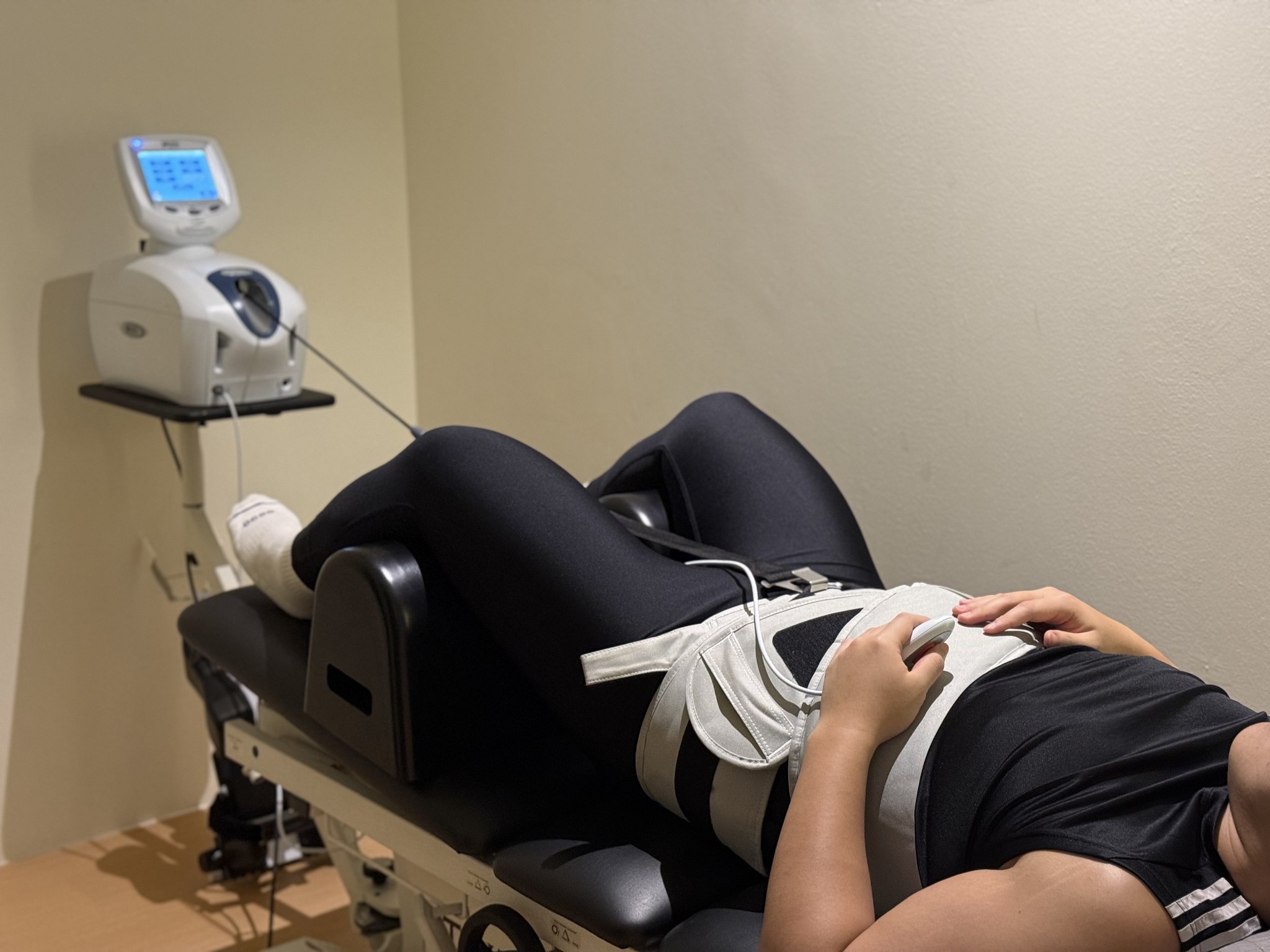
Spinal traction therapy is a non-surgical treatment that involves gently stretching the spine to decompress the discs and relieve pressure on nerves. This therapy is performed using sophisticated, multi-section treatment tables specifically engineered for precise and controlled spinal decompression. Its innovative design allows for unparalleled adjustability and precision in patient positioning, enabling us to target specific areas of your spine for a comfortable and highly effective treatment experience.
How does it work?
Spinal traction therapy works by gently stretching the spine. Research suggests this controlled stretching creates a negative pressure within the intervertebral discs, the soft cushions between your vertebrae. This "vacuum effect" is believed to help:
• Decompress the discs: Relieving pressure on pinched nerves.
• Retract bulging or herniated disc material: Drawing it back into place.
• Increase disc space: Promoting improved circulation and nutrient flow to the discs.
• Relax tense muscles: Reducing muscle spasms and stiffness.
Our specialized traction equipment applies precise, controlled forces to the spine in either an intermittent (pull-and-release) or static (constant pull) manner, depending on your specific condition and treatment plan.
What to expect
Most patients find spinal traction therapy to be a comfortable and relaxing experience. You'll be securely positioned on the treatment table, and as the therapy begins, you'll feel a gentle, controlled stretch in your spine. It's a subtle sensation, often described as a mild pull or elongation. Many individuals even find themselves relaxing to the point of falling asleep during a session. Some might experience a mild, dull soreness for the first couple of weeks as the spine adjusts to the stretching and decompression, but this is typically temporary.
How long will the treatment take?
A typical treatment session usually lasts between 15 to 30 minutes. The overall length of your treatment plan will vary depending on the severity of your condition and your individual response to therapy.
General frequency
Generally, we recommend a weekly frequency for consistent progress, though this can be adjusted based on your specific needs and how your body responds to the treatment. Your personalized treatment plan will be discussed during your initial consultation.
Is it safe or effective?
Spinal traction therapy is widely considered safe and effective when administered by a trained and certified professional. Our equipment is designed to prioritize patient safety and therapeutic outcomes, often being FDA-cleared (as is standard for such medical devices). Clinical studies and extensive use in practices worldwide consistently support its efficacy in treating a range of spinal conditions, including herniated discs, sciatica, degenerative disc disease, facet syndrome, and pinched nerves. Many patients report significant pain relief and improved mobility.
Are there any risks or side effects?
When performed by a qualified practitioner, spinal decompression therapy has minimal risks and side effects. Potential, usually temporary, side effects may include mild discomfort or soreness during or after the first few sessions, and rarely, nausea or headache. It's also possible to experience a temporary increase in pain immediately after treatment. It's crucial to communicate any discomfort you feel during or after the session to your therapist. Spinal traction is generally not recommended for certain individuals, including pregnant individuals, those with severe spinal infections or conditions (like certain tumors), or those who have had recent spinal surgery. We will thoroughly review your medical history to determine if this therapy is right for you.
How do I know I need it?
You might benefit from spinal traction therapy if you experience:
• Chronic back or neck pain that hasn't responded to other conservative treatments.
• Sciatica (pain radiating down the leg).
• Herniated or bulging discs.
• Degenerative disc disease.
• Pinched nerves.
• Facet joint syndrome.
• Muscle spasms in the back or neck.
If you're experiencing persistent spinal discomfort, a consultation with our experienced team can help determine if spinal traction therapy is the appropriate and effective solution to help you find lasting relief and get back to living pain-free.
Spinal Traction
What is Spinal Traction Therapy?
Spinal traction therapy is a non-surgical treatment that involves gently stretching the spine to decompress the discs and relieve pressure on nerves. This therapy is performed using sophisticated, multi-section treatment tables specifically engineered for precise and controlled spinal decompression. Its innovative design allows for unparalleled adjustability and precision in patient positioning, enabling us to target specific areas of your spine for a comfortable and highly effective treatment experience.
How does it work?
Spinal traction therapy works by gently stretching the spine. Research suggests this controlled stretching creates a negative pressure within the intervertebral discs, the soft cushions between your vertebrae. This "vacuum effect" is believed to help:
• Decompress the discs: Relieving pressure on pinched nerves.
• Retract bulging or herniated disc material: Drawing it back into place.
• Increase disc space: Promoting improved circulation and nutrient flow to the discs.
• Relax tense muscles: Reducing muscle spasms and stiffness.
Our specialized traction equipment applies precise, controlled forces to the spine in either an intermittent (pull-and-release) or static (constant pull) manner, depending on your specific condition and treatment plan.
What to expect
Most patients find spinal traction therapy to be a comfortable and relaxing experience. You'll be securely positioned on the treatment table, and as the therapy begins, you'll feel a gentle, controlled stretch in your spine. It's a subtle sensation, often described as a mild pull or elongation. Many individuals even find themselves relaxing to the point of falling asleep during a session. Some might experience a mild, dull soreness for the first couple of weeks as the spine adjusts to the stretching and decompression, but this is typically temporary.
How long will the treatment take?
A typical treatment session usually lasts between 15 to 30 minutes. The overall length of your treatment plan will vary depending on the severity of your condition and your individual response to therapy.
General frequency
Generally, we recommend a weekly frequency for consistent progress, though this can be adjusted based on your specific needs and how your body responds to the treatment. Your personalized treatment plan will be discussed during your initial consultation.
Is it safe or effective?
Spinal traction therapy is widely considered safe and effective when administered by a trained and certified professional. Our equipment is designed to prioritize patient safety and therapeutic outcomes, often being FDA-cleared (as is standard for such medical devices). Clinical studies and extensive use in practices worldwide consistently support its efficacy in treating a range of spinal conditions, including herniated discs, sciatica, degenerative disc disease, facet syndrome, and pinched nerves. Many patients report significant pain relief and improved mobility.
Are there any risks or side effects?
When performed by a qualified practitioner, spinal decompression therapy has minimal risks and side effects. Potential, usually temporary, side effects may include mild discomfort or soreness during or after the first few sessions, and rarely, nausea or headache. It's also possible to experience a temporary increase in pain immediately after treatment. It's crucial to communicate any discomfort you feel during or after the session to your therapist. Spinal traction is generally not recommended for certain individuals, including pregnant individuals, those with severe spinal infections or conditions (like certain tumors), or those who have had recent spinal surgery. We will thoroughly review your medical history to determine if this therapy is right for you.
How do I know I need it?
You might benefit from spinal traction therapy if you experience:
• Chronic back or neck pain that hasn't responded to other conservative treatments.
• Sciatica (pain radiating down the leg).
• Herniated or bulging discs.
• Degenerative disc disease.
• Pinched nerves.
• Facet joint syndrome.
• Muscle spasms in the back or neck.
If you're experiencing persistent spinal discomfort, a consultation with our experienced team can help determine if spinal traction therapy is the appropriate and effective solution to help you find lasting relief and get back to living pain-free.
References
• Arieira, A., Fernandes, N., Fernandes, P., Silva, F. S., Carvalho, O., Leal, A. (2025). Biomechanical and clinical effects of spinal traction: Enhancing lumbar health and restoring spine function https://repositorium.sdum.uminho.pt/handle/1822/95443
• Beurskens, A. J., de Vet, H. C., Köke, A. J., Regtop, W., van der Heijden, G. J., Lindeman, E., & Knipschild, P. G. (1997). Efficacy of traction for nonspecific low back pain. 12-week and 6-month results of a randomized clinical trial. Spine, 22(23), 2756–2762. https://doi.org/10.1097/00007632-199712010-00011
• Fitz-Ritson D. (1984). Therapeutic traction: A review of neurological principles and clinical applications. Journal of manipulative and physiological therapeutics, 7(1), 39–49.
• Integrated Pain Solutions (2025). How Spinal Decompression Therapy Benefits Patients with Spinal Stenosis https://www.americanpainconsortium.com/patient-resources/news/2025/february/ how-spinal-decompression-therapy-benefits-patien/
• Krause, M., Refshauge, K. M., Dessen, M., & Boland, R. (2000). Lumbar spine traction: Evaluation of effects and recommended application for treatment. Manual therapy, 5(2), 72–81. https://doi.org/10.1054/math.2000.0235
What is Spinal Traction Therapy?
Spinal traction therapy is a non-surgical treatment that involves gently stretching the spine to decompress the discs and relieve pressure on nerves. This therapy is performed using sophisticated, multi-section treatment tables specifically engineered for precise and controlled spinal decompression. Its innovative design allows for unparalleled adjustability and precision in patient positioning, enabling us to target specific areas of your spine for a comfortable and highly effective treatment experience.
How does it work?
Spinal traction therapy works by gently stretching the spine. Research suggests this controlled stretching creates a negative pressure within the intervertebral discs, the soft cushions between your vertebrae. This "vacuum effect" is believed to help:
• Decompress the discs: Relieving pressure on pinched nerves.
• Retract bulging or herniated disc material: Drawing it back into place.
• Increase disc space: Promoting improved circulation and nutrient flow to the discs.
• Relax tense muscles: Reducing muscle spasms and stiffness.
Our specialized traction equipment applies precise, controlled forces to the spine in either an intermittent (pull-and-release) or static (constant pull) manner, depending on your specific condition and treatment plan.
What to expect
Most patients find spinal traction therapy to be a comfortable and relaxing experience. You'll be securely positioned on the treatment table, and as the therapy begins, you'll feel a gentle, controlled stretch in your spine. It's a subtle sensation, often described as a mild pull or elongation. Many individuals even find themselves relaxing to the point of falling asleep during a session. Some might experience a mild, dull soreness for the first couple of weeks as the spine adjusts to the stretching and decompression, but this is typically temporary.
How long will the treatment take?
A typical treatment session usually lasts between 15 to 30 minutes. The overall length of your treatment plan will vary depending on the severity of your condition and your individual response to therapy.
General frequency
Generally, we recommend a weekly frequency for consistent progress, though this can be adjusted based on your specific needs and how your body responds to the treatment. Your personalized treatment plan will be discussed during your initial consultation.
Is it safe or effective?
Spinal traction therapy is widely considered safe and effective when administered by a trained and certified professional. Our equipment is designed to prioritize patient safety and therapeutic outcomes, often being FDA-cleared (as is standard for such medical devices). Clinical studies and extensive use in practices worldwide consistently support its efficacy in treating a range of spinal conditions, including herniated discs, sciatica, degenerative disc disease, facet syndrome, and pinched nerves. Many patients report significant pain relief and improved mobility.
Are there any risks or side effects?
When performed by a qualified practitioner, spinal decompression therapy has minimal risks and side effects. Potential, usually temporary, side effects may include mild discomfort or soreness during or after the first few sessions, and rarely, nausea or headache. It's also possible to experience a temporary increase in pain immediately after treatment. It's crucial to communicate any discomfort you feel during or after the session to your therapist. Spinal traction is generally not recommended for certain individuals, including pregnant individuals, those with severe spinal infections or conditions (like certain tumors), or those who have had recent spinal surgery. We will thoroughly review your medical history to determine if this therapy is right for you.
How do I know I need it?
You might benefit from spinal traction therapy if you experience:
• Chronic back or neck pain that hasn't responded to other conservative treatments.
• Sciatica (pain radiating down the leg).
• Herniated or bulging discs.
• Degenerative disc disease.
• Pinched nerves.
• Facet joint syndrome.
• Muscle spasms in the back or neck.
If you're experiencing persistent spinal discomfort, a consultation with our experienced team can help determine if spinal traction therapy is the appropriate and effective solution to help you find lasting relief and get back to living pain-free.
Ready to feel better?
Take the first step to recovery today
References
• Arieira, A., Fernandes, N., Fernandes, P., Silva, F. S., Carvalho, O., Leal, A. (2025). Biomechanical and clinical effects of spinal traction: Enhancing lumbar health and restoring spine function https://repositorium.sdum.uminho.pt/handle/1822/95443
• Beurskens, A. J., de Vet, H. C., Köke, A. J., Regtop, W., van der Heijden, G. J., Lindeman, E., & Knipschild, P. G. (1997). Efficacy of traction for nonspecific low back pain. 12-week and 6-month results of a randomized clinical trial. Spine, 22(23), 2756–2762. https://doi.org/10.1097/00007632-199712010-00011
• Fitz-Ritson D. (1984). Therapeutic traction: A review of neurological principles and clinical applications. Journal of manipulative and physiological therapeutics, 7(1), 39–49.
• Integrated Pain Solutions (2025). How Spinal Decompression Therapy Benefits Patients with Spinal Stenosis https://www.americanpainconsortium.com/patient-resources/news/2025/february/ how-spinal-decompression-therapy-benefits-patien/
• Krause, M., Refshauge, K. M., Dessen, M., & Boland, R. (2000). Lumbar spine traction: Evaluation of effects and recommended application for treatment. Manual therapy, 5(2), 72–81. https://doi.org/10.1054/math.2000.0235
References
• Arieira, A., Fernandes, N., Fernandes, P., Silva, F. S., Carvalho, O., Leal, A. (2025). Biomechanical and clinical effects of spinal traction: Enhancing lumbar health and restoring spine function https://repositorium.sdum.uminho.pt/handle/1822/95443
• Beurskens, A. J., de Vet, H. C., Köke, A. J., Regtop, W., van der Heijden, G. J., Lindeman, E., & Knipschild, P. G. (1997). Efficacy of traction for nonspecific low back pain. 12-week and 6-month results of a randomized clinical trial. Spine, 22(23), 2756–2762. https://doi.org/10.1097/00007632-199712010-00011
• Fitz-Ritson D. (1984). Therapeutic traction: A review of neurological principles and clinical applications. Journal of manipulative and physiological therapeutics, 7(1), 39–49.
• Integrated Pain Solutions (2025). How Spinal Decompression Therapy Benefits Patients with Spinal Stenosis https://www.americanpainconsortium.com/patient-resources/news/2025/february/ how-spinal-decompression-therapy-benefits-patien/
• Krause, M., Refshauge, K. M., Dessen, M., & Boland, R. (2000). Lumbar spine traction: Evaluation of effects and recommended application for treatment. Manual therapy, 5(2), 72–81. https://doi.org/10.1054/math.2000.0235

Hours
Tue-Fri: 9am-6pm
Sat: 9am-5pm
Sun-Mon: Closed
Hours
Tue-Fri: 9am-6pm
Sat: 9am-5pm
Sun-Mon: Closed
Hours
Tue-Fri: 9am-6pm
Sat: 9am-5pm
Sun-Mon: Closed
Hours